 Jordan Lee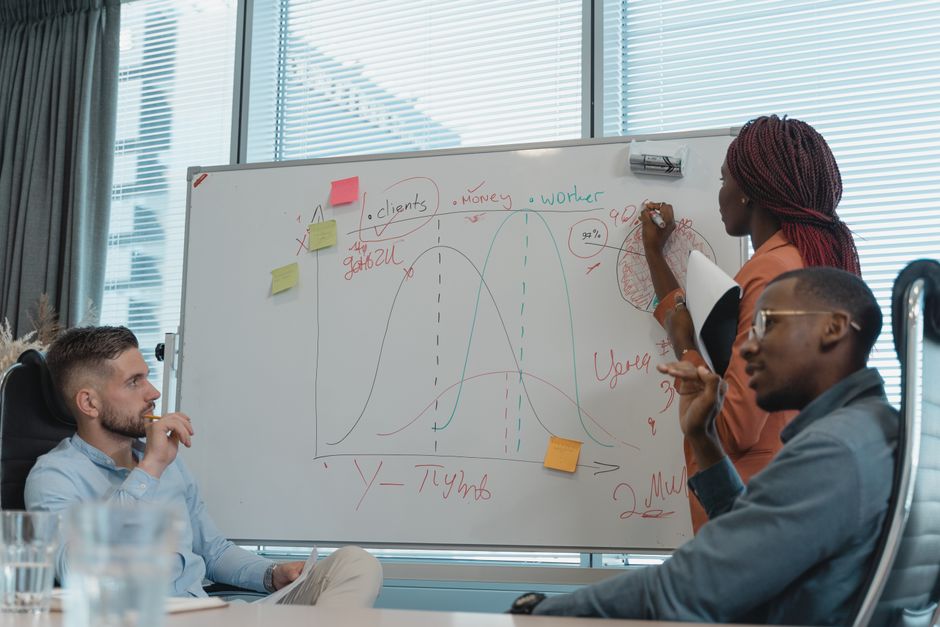
Most small studios get roles wrong before they write a single line of code. Not because they’re disorganized, but because they copy the org chart from a studio twenty times their size and then wonder why nobody knows what they’re supposed to be doing.
I’ve watched this happen up close. A five-person team with a “CEO,” a “Head of Marketing,” a “Lead Designer,” and a “Creative Director”, and somehow nobody owns the build pipeline. The titles felt serious. The game didn’t ship.
Here’s what I actually believe, after working in teams from 4 people to 400: at small scale, roles should map to work, not identity. That distinction sounds obvious, but it changes almost every decision you’ll make about how to structure your team.
The Fundamental Problem With Copying AAA Structure
Big studios have roles built around specialization and redundancy. You can have three people whose entire job is lighting because the game has 80 hours of content and lighting quality at that scale genuinely requires it. A small studio borrowing that model ends up with a “Lighting Artist” who spends three weeks lighting and then has nothing to do, while the one person who understands Unity’s render pipeline is drowning.
What surprised me when I first started tracking this seriously was how consistently the bottleneck was never the thing the team thought it was. Teams would say “we need another artist” and the real problem was that nobody owned asset integration. Tasks were being completed but not shipped into the build. That’s a producer problem, not a headcount problem.
Small studios don’t need more roles. They need clearer ownership.
Start With Work, Not Titles
Before you name a single role, list every recurring category of work your game actually requires. Not aspirationally. What does the game need done in the next 90 days?
For a typical 4-8 person indie team making a mid-complexity 2D or 3D game, that list usually shakes out to something like: programming (gameplay, tools, build), art (concept, production, tech), design (systems, level, UX), audio (sound design, implementation, occasionally music), and production (scheduling, dependencies, communication, QA coordination). That’s it. Five functional areas. If you have eight people, that means almost everyone is covering more than one area. That’s fine. That’s the job.
What I’d recommend: write out every discrete task category, then assign each to a person. Not a title. A person. If a task category has no owner, you’ve found your first structural problem. If one person owns six categories and another owns one, you’ve found your second.
Titles come after this exercise, not before. And honestly? For a studio of six people, titles mostly matter for external-facing stuff (press, investors, developer relations) rather than internal clarity. Internally, what matters is who answers for what.
The Roles That Actually Matter in a Small Studio
Jobs in Game Development [Team Management] · Masahiro Sakurai on Creating Games on YouTube
There are four functional responsibilities that consistently decide whether small studios ship or stall. Not because they’re the most creative or the most technically impressive, but because they’re the ones that get skipped.
Someone who owns the schedule. This doesn’t need to be a full-time producer. It can be your lead programmer who spends six hours a week on it. But there must be one named person who knows what’s in progress, what’s blocked, and what’s at risk. Tools like Hacknplan (built specifically for game dev) or even a well-structured Notion board work fine at this scale. What doesn’t work is “we all kind of know” because you don’t, and you’ll find out during crunch.
Someone who owns technical infrastructure. Build pipeline, version control discipline, integration testing, platform SDKs. This is usually your most senior programmer, but the key is that it’s explicitly their responsibility, not a shared assumption. I’ve seen games delayed by six weeks because nobody owned the submission pipeline until three weeks before release.
Someone who owns the player-facing design. I mean the moment-to-moment experience: how does it feel to play this game for the first time? This is a design responsibility, but it bleeds into UX, onboarding, and difficulty tuning. In small teams this is often the creative director or lead designer. The important thing is that someone has explicit authority to make final calls here, because ambiguity in this area creates the most debate-to-output ratio of anything in game development.
Someone who owns external communication. Press, wishlists, community, storefronts. At a small studio this is often a founder wearing another hat. That’s fine. But if it’s nobody’s job, it doesn’t happen. Marketing inertia is one of the most common reasons good small games underperform commercially, and it almost always traces back to structural neglect rather than bad games.
Generalists, Specialists, and the Myth of the T-Shaped Person
You’ve probably heard the “T-shaped” framing: deep in one area, functional in several. It’s a reasonable model. But I’ll be honest: at really small scale, more of your team needs to be closer to hyphen-shaped. Wide across multiple areas, genuinely competent in two or three, expert in one. The T assumes you have enough people that someone else covers the width. At four people, you don’t.
The practical implication: when you’re hiring (or deciding whether to contract vs hire), weight breadth more than most job postings suggest. A programmer who can also do basic UX and talk to players intelligently is worth more to a six-person studio than a programmer who is better at programming but nothing else. The gap in programming quality is real but often less impactful than the reduction in coordination overhead.
Contracts and freelancers make sense for genuine specialty spikes: a composer, a localization pass, console certification QA, a trailer editor. Work that has a clear scope and a defined end. For the roles described above, schedule, infrastructure, player experience, external communication, you want named people on your core team.
Growing Out of Your Structure
Sources
- Hacknplan
- Tima Miroshnichenko
- or three
The structure that ships your first game will probably break on your second. That’s not failure, it’s growth. What you want to avoid is the structure breaking mid-project, which usually happens when a team grows from 6 to 12 people without explicitly revisiting who owns what.
The signal to watch for: when someone says “I thought you were handling that,” a role boundary has failed. Track those moments. If the same boundary fails twice, fix it explicitly. Write it down. Put it in your team handbook, even if that “handbook” is a single Notion page.
A book I genuinely recommend here is The Art of Game Design by Jesse Schell for the design side, but for the structural and production side, Game Production by Heather Maxwell Chandler is more directly useful than anything else I’ve found. It’s not glamorous reading but it’ll save you months.
Photo: Tima Miroshnichenko via Pexels