 Stephen Brenish

You’ve spent ten years producing indie films. You know how to wrangle a crew, manage a shooting schedule, and sweet-talk a distributor into taking your finished product. Then someone offers you a senior producer role at a mid-sized game studio, and you think: “How different can it be?”
Very different. The skill overlap is real but deceptively shallow. People who make this transition without understanding the structural differences often find themselves three months in, completely overwhelmed, wondering why nothing they learned on set translates to what’s actually happening on the studio floor.
The Fundamental Nature of the Job Is Different
Both titles carry the word “producer,” but the work underneath diverges in ways that matter from day one.
A film producer’s primary job is to get a project made. That means assembling financing, hiring key creatives, managing the shoot, and shepherding the finished product through distribution. The workflow is fundamentally linear: development, pre-production, production, post-production, release. Once the film ships, your job is essentially done. You’re onto the next one.
A game producer’s job is closer to running a small software company inside a larger one. You’re not just getting something made. You’re coordinating continuous, iterative development across disciplines that often have conflicting priorities and working rhythms. If you want a grounded picture of what that actually looks like day to day, this breakdown of what a game producer actually does captures the breadth of the role. The scope is wider, the feedback loops are tighter, and the project rarely just “ends” cleanly.
A game can ship and then enter two more years of live service updates. A film producer doesn’t have an equivalent of a post-launch content patch.
Creative Control and Collaboration Look Completely Different
On a film, the director is king. The producer might shape the vision at a high level, provide notes, and resolve conflict between departments, but the director’s creative authority is broadly understood and respected. There’s a clear hierarchy. It keeps things moving.
In game development, creative authority is more distributed and more contested. You have a game director or creative director, sure, but you also have a lead designer, a lead engineer, and an art director who each own significant pieces of the product experience. These people don’t always agree. And unlike a film set where you can make a decision in the morning and shoot it in the afternoon, a game mechanic decision can ripple through six months of engineering work.
The game producer’s job is often to facilitate alignment rather than enforce a top-down decision. That requires a different political skill set entirely. You’re mediating between engineering timelines and artistic ambitions constantly. Film producers don’t typically face that tension at the same depth.
Budget Structure and Financial Risk Are Structured Differently
A film has a budget. Lock picture, and there’s no meaningful new cost. Marketing is handled separately by distribution. The financial exposure has a ceiling.
Game budgets are more elastic. Features creep. Engine integrations fail. A single gameplay system can take three times as long as estimated, and the knock-on effects cascade across the schedule. A film producer thinks in terms of shooting days. A game producer thinks in terms of sprint velocity, capacity planning, and burn rate against a milestone roadmap. If you’re not familiar with those milestone concepts, it’s worth getting solid on what alpha, beta, and gold actually mean in game development, because they structure how studios communicate financial progress to publishers and leadership.
On the publisher side, game producers often manage against milestone-based payment structures. Miss a milestone, and the studio might not get its next payment installment. That’s a very different financial pressure than anything most film producers have experienced.
Live service games add another layer. Revenue isn’t a single theatrical release window. It’s a continuous stream tied to content updates, seasonal events, and player retention metrics. A game producer at a live service studio is partly a product manager, tracking monthly active users and average revenue per user alongside their development schedule.
The Tools and Processes Don’t Map Cleanly
| Dimension | Film Producer | Game Producer |
|---|---|---|
| Project timeline | Linear: fixed start and end | Iterative: sprints and milestone gates |
| Creative authority | Director-driven, clear hierarchy | Distributed across multiple leads |
| Budget structure | Fixed with ceiling | Elastic, feature creep common |
| Post-launch work | Minimal (distribution only) | Continuous (patches, live service) |
| Financial model | Single release window | Continuous revenue streams |
| Process tools | Standardized across industry | Studio-specific and fragmented |
| Planning approach | Locked script as north star | Living document, playtesting feedback |
Film production runs on a mature, standardized toolset. Call sheets, script breakdowns, script supervisor reports, standardized budget templates. These have been industry standard for decades. Move between productions and the tools look familiar.
Game production tooling is more fragmented and studio-specific. Some studios run Jira with custom workflows. Others use Hansoft, Shotgun, or elaborate Notion setups. Agile frameworks like Scrum and Kanban are common but applied inconsistently. Before you assume Scrum is the right choice, it’s worth understanding when Kanban actually outperforms Scrum for game teams, because the answer isn’t as obvious as most people assume.
The iterative nature of game development also means the process methodology matters enormously. Film has a locked script as its north star. Games don’t. Features change. Systems get cut or redesigned based on playtesting feedback. A producer who is used to executing against a fixed plan will struggle when the plan is a living document.
Here’s a quick comparison to make the structural differences concrete:
| Dimension | Film Producer | Game Producer |
|---|---|---|
| Project timeline | Linear: fixed start and end | Iterative: sprints and milestone gates |
| Creative authority | Director-driven hierarchy | Distributed across disciplines |
| Budget ceiling | Mostly fixed at greenlight | Elastic, scope-driven |
| Tooling | Standardized industry-wide | Studio-specific, fragmented |
| Post-launch involvement | Minimal (awards, distribution) | Potentially years (live service) |
| Risk type | Financial, scheduling | Technical, creative, and financial |
| Team relationship model | Crew hired per project | Embedded, long-term team |
The Team Relationship Dynamic Is Fundamentally Different
Film crews are project-based. You assemble your team, work intensely for a defined period, and then people go their separate ways. There’s an inherent transactional quality to it, even among people who work together repeatedly. That’s not a criticism, it’s just the nature of contract-based crew work.
Game studios employ their core teams full-time. You’re working with the same engineers, artists, and designers for potentially years. Relationships are long-term. Trust compounds or erodes over many projects. The political and interpersonal dynamics of a studio floor are closer to corporate office culture than a film set.
This means a game producer needs to invest heavily in team health in ways a film producer rarely has to. Burnout isn’t just an individual wellness issue. It’s a real structural risk in game development. Studios with poor production planning create exhausted teams, and that exhaustion has cumulative costs. If you want to understand the long arc of that problem, this article on the year-five burnout cliff in game development is required reading. It explains why so many experienced developers leave the industry right when they’re most valuable.
Game producers are also deeply embedded in studio culture in a way film producers aren’t. You’re shaping how people feel about coming to work every day, across years. That’s a heavier responsibility.
Recommended Tools for Game Producers Coming From Film
If you’re making the transition from film to game production (or just trying to get better at the game side), here are some resources worth your time.
Project management software:
- Jira is the default at most mid-to-large studios. Learn its workflow customization options, not just the basics.
- Hansoft is common at larger studios and worth understanding if you’re targeting AAA.
- Notion or Linear are popular at smaller indie teams where flexibility matters more than enterprise features.
Books:
- “The Art of Game Design” by Jesse Schell gives game producers crucial context on what designers are actually trying to accomplish.
- “Producing Games” by D.S. Cohen and Zack Manrique is one of the few books that directly addresses the producer role with practical detail.
- “Agile Game Development” by Clinton Keith is essential if you’re working in any Scrum or Kanban environment.
Online courses:
- The Game Producer Masterclass courses available through platforms like Udemy and Coursera vary in quality, but focus on ones that teach scheduling, risk management, and milestone planning specifically.
- IGDA (International Game Developers Association) offers professional development resources and community access that’s genuinely useful for producers in transition.
The gap between film production and game production is real, but it’s not uncrossable. The skills that make a great film producer, clear communication, team leadership, financial fluency, conflict resolution, are all valuable in games. What changes is the context around those skills: more technical, more iterative, longer-term, and more organizationally complex. Go in with clear eyes about that gap, do the homework to close it, and the transition is genuinely achievable.
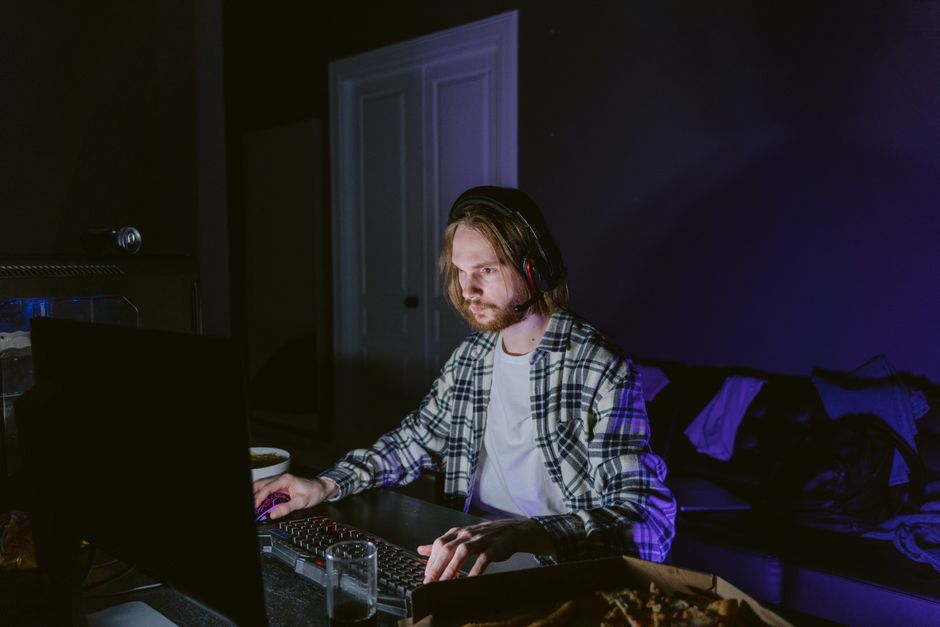
Photo: Donald Tong via Pexels